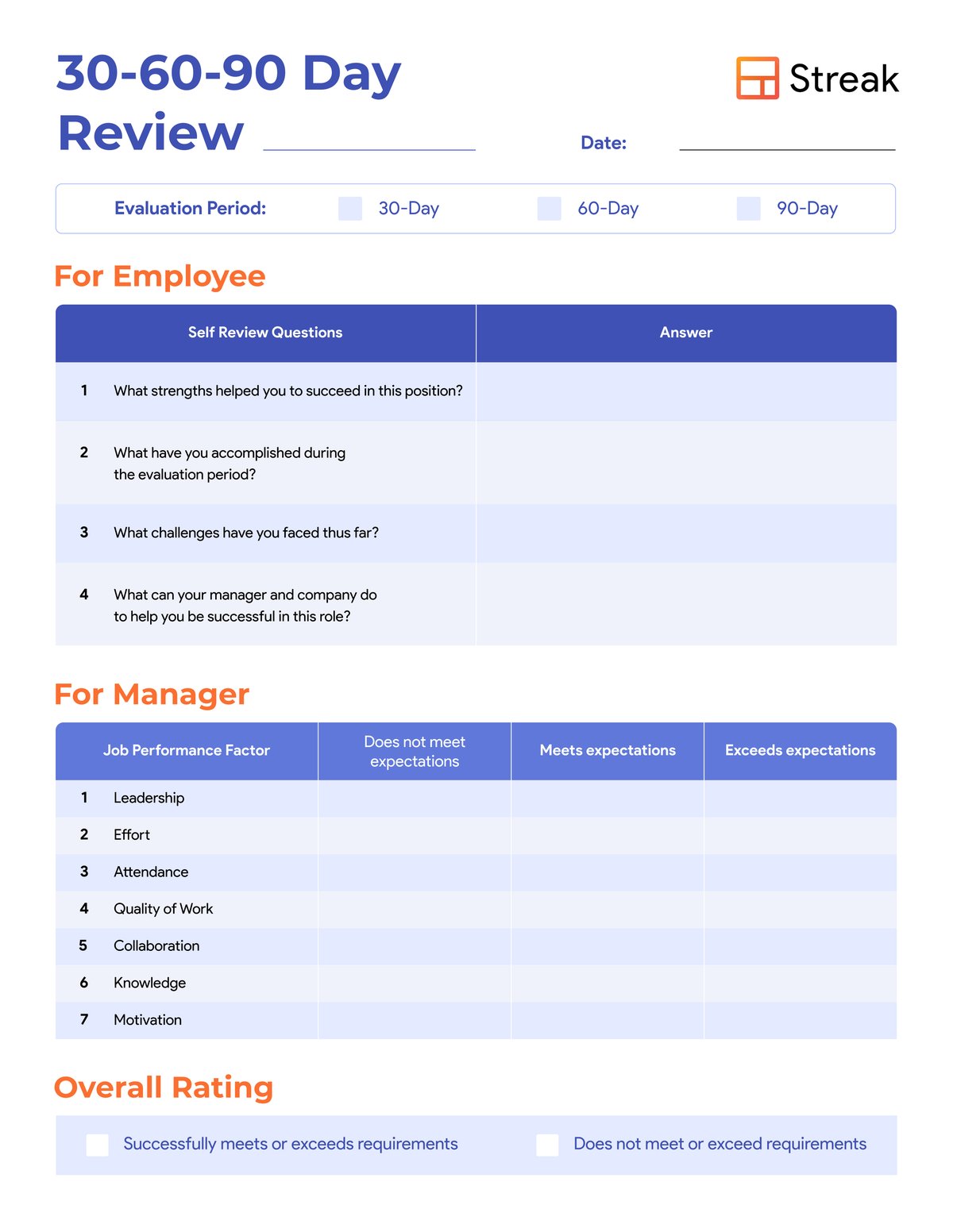
Every significant decision, from purchasing a new laptop to greenlighting a multi-million dollar infrastructure project, hinges on understanding two critical elements: its Detailed Specifications & Performance Review. This isn't just jargon for engineers or procurement specialists; it's the bedrock of informed choice, ensuring that what's promised aligns with what's delivered and that true value is achieved. Without a clear understanding of detailed specifications, you're buying a black box. Without a rigorous performance review, you're operating on faith.
In a world teeming with options and marketing hype, cutting through the noise demands a keen eye for the underlying technical truths and a systematic approach to evaluating how well something truly performs. This guide will arm you with the insights and frameworks to not just read specifications, but to understand them, and to critically assess performance so you can make confident decisions every time.
At a Glance: What You’ll Discover
- Demystifying the Language: Understand what "detailed specifications" truly mean beyond a mere feature list.
- Performance vs. Detail: Grasp the crucial difference between what something must achieve (performance) and how it must achieve it (detail).
- Why It Matters: Unpack the profound impact of robust specifications and reviews on product quality, project success, and financial viability.
- Crafting Clarity: Learn the components of effective specifications, from functional requirements to verification criteria.
- Measuring True Value: Explore methodologies for objective performance review, moving beyond subjective impressions.
- Common Pitfalls: Identify frequent missteps in evaluation and how to avoid them.
- Your Actionable Toolkit: Gain practical strategies to become a more astute evaluator and decision-maker.
Beyond the Buzzwords: What Are We Really Talking About?
When we talk about "Detailed Specifications & Performance Review," we're essentially navigating the gap between expectation and reality. It’s about setting clear, measurable targets and then rigorously checking if those targets have been met. Think of it as a quality assurance process for almost anything you can imagine – a new smartphone, a software update, a construction project, or even a service agreement.
Specifications: The Blueprint of Expectation
At its core, a "specification" is a precise and often formal document that defines requirements. It outlines what an item, system, or service must do, how it must function, and what characteristics it must possess. These aren't just wish lists; they are contractual obligations, design parameters, and the very foundation upon which performance is measured.
However, not all specifications are created equal. As the Defense Acquisition University (DAU) explains, specifications can be categorized in many ways – by who develops them (government, industry, company), by geographic origin (international, national), or by functional use (system, component, software). But perhaps most critically, they can be categorized by how they state requirements:
- Performance Specifications: These define requirements in terms of the results needed and the criteria for verifying compliance, without dictating how those results are to be achieved. They describe functional requirements, capabilities, the operating environment, and any interface or compatibility needs. For example, a performance specification might state that "the vehicle must accelerate from 0 to 60 mph in less than 5 seconds." It doesn't tell the manufacturer to use a V8 engine or a specific turbocharger; it simply defines the desired outcome and how to test for it. The DAU emphasizes that this approach encourages innovation by not presenting a preconceived solution.
- Detail Specifications: In contrast, these specify the exact materials, dimensions, processes, and design features. They prescribe how something is to be built or implemented. For instance, a detail specification would state, "the vehicle must be powered by a 3.0-liter twin-turbo V6 engine (model ABC-123) and use a 7-speed dual-clutch transmission." While useful for standardizing components or ensuring compatibility with existing systems, detail specifications can stifle innovation by locking in a particular solution.
Understanding this distinction is paramount. A focus on performance specifications often leads to more innovative, cost-effective, and adaptable solutions because it empowers the supplier or developer to find the best way to meet the objective, rather than forcing them into a predefined one. The common denominator, in each case, is indeed performance.
Performance Review: The Reality Check
Once specifications are set, the "performance review" is the process of evaluating whether those requirements have been met. This isn't a casual once-over; it's a systematic, often data-driven assessment designed to:
- Verify Compliance: Did the product or service perform as promised in the specifications?
- Identify Gaps: Where did performance fall short, or even exceed expectations?
- Measure Efficiency: How well does it perform relative to resource consumption (power, time, cost)?
- Assess Reliability & Durability: How consistently can it perform over time and under varying conditions?
- Inform Decisions: Should we adopt it, improve it, reject it, or adjust our expectations?
Together, detailed specifications provide the benchmark, and the performance review provides the verdict. It's a continuous feedback loop essential for quality assurance, risk management, and strategic decision-making in any domain.
Why Do Detailed Specifications & Performance Reviews Matter So Much?
In an age of instant gratification and quick fixes, the rigorous process of defining detailed specifications and conducting thorough performance reviews might seem like an unnecessary delay. However, skipping these steps is a classic penny-wise, pound-foolish mistake that almost always leads to costly rework, missed deadlines, disappointed users, and even project failures.
For Consumers: Making Smarter Buys
Imagine buying a new smartphone. You're presented with an array of models, each promising the "best camera" or "fastest processor." Without detailed specifications, these claims are meaningless. You'd struggle to compare models effectively.
- Clarity in Choice: Specifications like screen resolution (e.g., "Liquid Retina XDR display, 2732-by-2048 pixels"), processor speed (e.g., "Apple M2 chip, 8-core CPU"), or battery life (e.g., "up to 10 hours of web surfing on Wi‑Fi") provide concrete, measurable data points. When you compare something like the iPad Pro third generation, these detailed specs are what allow you to understand its capabilities versus other tablets.
- Setting Expectations: They tell you exactly what you're getting, preventing nasty surprises later. If a speaker is specified for "20-20,000 Hz frequency response," you expect full-range audio, not tinny sound.
- Evaluating Value: By understanding what you're paying for, you can assess if the price aligns with the performance and features offered. Is a premium price justified by superior specifications and review benchmarks?
For Businesses: Driving Innovation and Success
For businesses, detailed specifications and performance reviews are not just about product selection; they are fundamental to product development, supply chain management, IT infrastructure, and even employee performance evaluation.
- Product Development: For a software company, detailed specifications ensure that every developer is building towards the same vision, preventing feature creep or incompatible modules. Performance reviews, such as load testing or latency checks, verify that the software can handle expected user traffic and respond quickly.
- Vendor Selection: When choosing a cloud provider or a manufacturing partner, detailed specifications for uptime, security protocols, data transfer speeds, and production tolerances are non-negotiable. Performance reviews of potential vendors ensure they can consistently meet these requirements.
- Project Management: In large-scale projects, such as constructing a building or launching a satellite, every component, every material, and every subsystem has rigorous specifications. Regular performance reviews throughout the project life cycle ensure adherence to these specs, mitigating risks and ensuring the final outcome is safe, functional, and within budget.
- Legal & Compliance: In many industries (e.g., aerospace, medical devices), adherence to detailed specifications is mandated by law or regulatory bodies. Performance reviews provide the audit trail and evidence of compliance, protecting the company from legal repercussions and ensuring public safety.
For Government & Public Sector: Accountability and Efficiency
The public sector, particularly in defense and infrastructure, often deals with incredibly complex systems where failure is not an option. Here, detailed specifications and performance work statements (PWS) are crucial for accountability, resource allocation, and achieving strategic objectives.
- Taxpayer Value: Ensuring that public funds are spent wisely on solutions that genuinely meet needs. DAU’s focus on performance specifications for defense procurement highlights this; by defining results rather than solutions, the government encourages competitive, innovative bids that deliver the best value.
- Complex System Integration: For national defense systems or large-scale public transit, specifications ensure that disparate components from multiple contractors work seamlessly together, meeting stringent safety and operational performance standards.
- Transparency & Oversight: Clearly defined specs and review processes provide a framework for public scrutiny and legislative oversight, ensuring projects are executed ethically and effectively.
In essence, whether you're building a gadget or building a nation, detailed specifications and rigorous performance reviews transform vague aspirations into tangible, verifiable realities. They are the essential tools for ensuring quality, managing risk, fostering innovation, and ultimately, achieving success.
Deconstructing "Detailed Specifications": More Than Just a Feature List
A truly detailed specification is a comprehensive articulation of requirements, meticulously broken down into various categories. It’s not just about listing what something has, but what it does, how well it does it, and under what conditions.
1. Functional Requirements: The "What It Does"
These are the core actions or services the system or product must perform. They describe the behavior of the system as it relates to user goals.
- Examples:
- "The e-commerce system shall allow users to search for products by keyword."
- "The drone shall be capable of autonomous flight along a pre-programmed route."
- "The battery shall power the device for at least 10 hours of continuous use."
- "The database shall store customer order information."
2. Non-Functional Requirements (NFRs): The "How Well It Does It"
NFRs describe the quality attributes of the system. These are often more challenging to define and measure but are critical for user satisfaction and overall system success. They determine the system's effectiveness, efficiency, and usability.
- Performance:
- "The website shall load within 2 seconds for 95% of users."
- "The data processing module shall process 1,000 transactions per second."
- "The vehicle shall have a top speed of 150 mph."
- Security:
- "The system shall encrypt all sensitive user data at rest and in transit."
- "User authentication shall require multi-factor verification."
- Usability:
- "The user interface shall be navigable by a new user with less than 5 minutes of training."
- "Error messages shall be clear, concise, and offer actionable solutions."
- Scalability:
- "The application shall support up to 10,000 concurrent users without degradation in response time."
- "The storage system shall be expandable to 100TB with minimal downtime."
- Reliability:
- "The system shall have an uptime of 99.99% (no more than 52.56 minutes of downtime per year)."
- "The mean time between failures (MTBF) for critical components shall be at least 50,000 hours."
- Maintainability:
- "Software modules shall be independently deployable and updateable."
- "Diagnostic tools shall provide clear error codes for troubleshooting."
3. Environmental & Operational Conditions: The "Where and How It Operates"
These specifications define the context in which the product or system is expected to function. Ignoring these can lead to catastrophic failures.
- Examples:
- "The outdoor sensor shall operate reliably in temperatures ranging from -20°C to 50°C."
- "The device shall be resistant to dust and water ingress (IP67 certified)."
- "The software shall be compatible with Windows, macOS, and Linux operating systems."
- "The machinery shall withstand vibrations up to 2G during operation."
4. Interface & Interoperability Requirements: The "How It Connects"
Many modern systems don't operate in isolation. These specs define how a product or system interacts with others.
- Examples:
- "The API shall conform to RESTful principles and return JSON data."
- "The device shall communicate via Bluetooth 5.0 and Wi-Fi 6 standards."
- "The system shall integrate seamlessly with existing CRM software via defined protocols."
5. Verification Criteria: The "How We Prove It"
This is a critical, often overlooked, aspect of detailed specifications. For every requirement, especially performance specifications, there must be a defined method for testing and verifying that the requirement has been met. The DAU highlights this as central to performance specifications – "ensuring that sufficient verification means are included."
- Examples:
- For "website loads within 2 seconds": "Verification: Load testing with 100 concurrent users using [tool name] from 5 geographical locations will be performed. Average load time must be ≤ 2 seconds for 95% of requests."
- For "battery life of 10 hours": "Verification: Continuous video playback at 50% brightness and volume on a loop, from full charge to shutdown. Must exceed 10 hours."
- For "IP67 certified": "Verification: Independent certification by a recognized testing laboratory."
Without clear verification criteria, specifications are mere suggestions. They become impossible to objectively assess, leading to disputes and subjective interpretations during the performance review phase.
The Art of the Performance Review: Measuring Up to Expectations
Once you have your detailed specifications, the performance review transforms from a vague assessment into a targeted investigation. It’s about moving beyond anecdotal evidence to concrete, measurable data.
Defining Objective Performance Metrics
A crucial step is to translate your specifications into quantifiable metrics. "Fast" becomes "load time under 2 seconds." "Reliable" becomes "99.99% uptime."
- Throughput: How much work can it do in a given time (e.g., transactions per second, data processed per minute).
- Latency/Response Time: How long it takes for a system to respond to a request (e.g., milliseconds for an API call, seconds for a page load).
- Resource Utilization: How efficiently it uses resources (e.g., CPU cycles, memory, bandwidth, fuel consumption).
- Error Rate: The frequency of failures or incorrect outputs (e.g., percentage of failed API requests, defect rate in manufacturing).
- Availability: The percentage of time a system is operational and accessible.
- Accuracy: How correct the output is (e.g., sensor precision, calculation correctness).
Objective vs. Subjective Evaluation: The Need for Data
While user experience always has a subjective component, a robust performance review leans heavily on objective data.
- Objective: Measurable, quantifiable data. This comes from benchmarks, logs, test results, and monitoring tools. It's impartial and verifiable.
- Subjective: Perceptions, feelings, and opinions. This comes from user surveys, feedback forms, and personal impressions. While valuable for understanding the human element, it should complement, not replace, objective data.
For example, a new car might feel powerful (subjective), but its performance review will involve objective tests of 0-60 mph acceleration, braking distances, and cornering G-forces, directly mapping to performance specifications.
Testing Methodologies: Putting It to the Test
Performance reviews involve various testing methods, depending on what's being evaluated:
- Benchmarking: Running standardized tests (e.g., Geekbench for CPUs, Speedtest for internet) to compare against industry standards or competitors.
- Load Testing: Simulating high volumes of users or data to see how a system performs under stress.
- Stress Testing: Pushing a system beyond its normal operating limits to find its breaking point and identify vulnerabilities.
- Endurance/Soak Testing: Running a system for extended periods to detect memory leaks, performance degradation over time, or intermittent failures.
- Real-World Scenario Testing: Testing under actual operational conditions, which might include varying network conditions, diverse user inputs, or environmental extremes.
- A/B Testing: Comparing two versions of a product or feature (A and B) to see which performs better against a specific metric.
- User Acceptance Testing (UAT): Having actual end-users test the product in a realistic environment to ensure it meets their needs and expectations.
Interpreting Results: What Do the Numbers Really Mean?
Raw data from performance tests is only useful if it's correctly interpreted.
- Context is King: A website taking 5 seconds to load might be acceptable for a niche archival site but catastrophic for an e-commerce platform. Always relate results back to the original specifications and business goals.
- Identify Bottlenecks: Poor performance in one area can cascade. Is the slow database causing the slow website? Is the weak Wi-Fi causing poor streaming performance?
- Trend Analysis: One-off results can be misleading. Look for trends over time, especially during endurance tests, to spot gradual degradation.
- Statistical Significance: Ensure your test results are statistically valid and not just random fluctuations.
Bringing It All Together: A Framework for Evaluation
Successfully navigating the world of detailed specifications and performance reviews requires a structured approach. Here’s a practical framework to guide you, whether you’re developing a product, procuring a service, or simply making a significant purchase.
Phase 1: Defining the "Why" and the "What" (Requirements Gathering)
Before you can specify anything, you need to understand the underlying problem or need.
- Understand Stakeholder Needs: What do users, customers, internal teams, and management truly need? Conduct interviews, surveys, and workshops.
- Define Objectives & Goals: What are you trying to achieve? What success metrics will be used? These high-level goals will drive the detailed specs.
- Establish Scope: Clearly delineate what is in and out of scope to prevent "scope creep" and maintain focus.
- Identify Constraints: What are the budget, timeline, regulatory, or technical limitations? These directly influence what's feasible in your specifications.
Phase 2: Crafting the Specs (Clarity, Measurability, Testability)
This is where you translate needs into concrete, unambiguous requirements. Remember the DAU's guidance: focus on desired results.
- Prioritize Requirements: Not all specs are equally important. Categorize them (e.g., critical, high, medium, low) to guide development and testing efforts.
- Write SMART Specifications: Ensure each specification is:
- Specific: Clearly defined, no ambiguity.
- Measurable: Quantifiable (e.g., "99.9% uptime," not "high uptime").
- Achievable: Realistic given resources and constraints.
- Relevant: Aligns with the overall objectives.
- Time-bound: If applicable, when it needs to be achieved.
- Include Verification Criteria: For every key performance specification, explicitly state how it will be tested and what constitutes a pass/fail. This is your blueprint for the performance review.
- Review and Iterate: Specifications are rarely perfect on the first draft. Get feedback from all relevant stakeholders, including technical experts, users, and legal teams. Be prepared to refine them.
Phase 3: The Review Process (Structured Testing, Data Collection)
This is where the rubber meets the road. Execute your testing plan rigorously.
- Develop a Test Plan: Based on your verification criteria, outline specific test cases, scenarios, and environments.
- Execute Tests: Perform benchmarking, load testing, functional testing, user acceptance testing, and any other relevant methodologies. Use appropriate tools and skilled personnel.
- Collect Data Systematically: Document all test results, observations, and any deviations from expected behavior. Ensure data is organized and traceable back to specific specifications.
- Isolate Variables: Where possible, control for external factors that could influence performance to ensure accurate results.
Phase 4: Analysis & Decision Making (Comparing Against Specs, Identifying Gaps)
This phase moves from raw data to actionable insights.
- Compare Results to Specifications: Directly map test results against each detailed specification. Is it a pass, a fail, or partially met?
- Identify Discrepancies: Where are the gaps? Is the performance falling short, or are there unexpected issues? Also, note any areas where performance exceeds specifications – this can be a competitive advantage or an indicator of over-engineering.
- Root Cause Analysis: For any performance failures, investigate why they occurred. Was it a design flaw, a faulty component, an incorrect assumption in the spec, or an environmental factor?
- Risk Assessment: Evaluate the impact of any unmet specifications. Is it a critical failure, a minor inconvenience, or something that can be mitigated?
- Decision Formulation: Based on the analysis, formulate clear recommendations: approve, reject, require rework, or re-negotiate.
Phase 5: Iteration & Improvement (Feedback Loop)
The process doesn't end with a decision. It's an ongoing cycle of improvement.
- Feedback Integration: Use lessons learned from the performance review to refine future specifications, improve design processes, and enhance testing methodologies.
- Continuous Monitoring: For ongoing systems or services, implement continuous performance monitoring to ensure sustained compliance with specifications and identify any degradation over time.
- Version Control: Maintain clear version control for all specifications and review documents, especially for products or services that evolve over time.
By following this framework, you transform the complex task of detailed specifications and performance review into a manageable, transparent, and highly effective process.
Common Pitfalls and How to Sidestep Them
Even with the best intentions, the process of defining specifications and conducting reviews can be fraught with challenges. Being aware of these common pitfalls can help you navigate them effectively.
- Vague or Ambiguous Specifications: "The system should be user-friendly" or "performance should be good." These are subjective and untestable.
- Solution: Insist on SMART (Specific, Measurable, Achievable, Relevant, Time-bound) requirements. Define "user-friendly" with metrics like "average task completion time under 30 seconds for 90% of new users."
- Unrealistic Expectations/Scope Creep: Demanding impossible performance targets or constantly adding new features without adjusting resources or timelines.
- Solution: Ground specs in reality through market research, technical feasibility studies, and expert consultation. Implement strict change control processes for scope modifications.
- Lack of Objective Testing: Relying solely on anecdotal feedback or superficial checks instead of rigorous, data-driven performance reviews.
- Solution: Integrate clear verification criteria into every specification. Develop comprehensive test plans, utilize appropriate testing tools, and prioritize objective metrics.
- Ignoring Real-World Context: Testing in a sterile lab environment that doesn't reflect actual operational conditions.
- Solution: Design test scenarios that mimic real-world usage, including environmental variables, user load, and integration with other systems. Beta testing and pilot programs are invaluable.
- Analysis Paralysis: Getting bogged down in endless data collection and analysis without making a decision.
- Solution: Define clear decision criteria upfront. Understand that "good enough" often outweighs "perfect" when time-to-market or project deadlines are critical. Use risk assessment to prioritize what truly matters.
- Failure to Document: Not maintaining proper records of specifications, test plans, results, and decisions.
- Solution: Implement robust documentation and version control systems. This provides an audit trail, supports future improvements, and facilitates knowledge transfer.
- Ignoring the "Human Factor": Focusing purely on technical metrics while neglecting the actual user experience or ease of maintenance.
- Solution: While objective data is paramount, balance it with user feedback, usability testing, and consideration for maintainability. A technically perfect product that no one can use or support is a failure.
Beyond the Numbers: The Value of Context
While detailed specifications and rigorous performance reviews provide the essential objective framework, successful decision-making also requires integrating broader contextual factors. The "best" performing option on paper isn't always the best choice in reality.
- Cost-Benefit Analysis: Does the incremental performance gain justify the additional cost? Sometimes a "good enough" solution is more economically viable than a "perfect" one that's significantly more expensive or complex.
- Future-proofing and Scalability: A product might meet current specifications but will it scale to future demands? Can it be easily updated or integrated with emerging technologies? Consider the long-term roadmap.
- Vendor Reputation and Support: Beyond the product itself, evaluate the reliability, support, and responsiveness of the supplier. Excellent specifications mean little if the vendor's service is poor or they can't deliver consistently. Look at their track record, not just their promises.
- Ecosystem and Compatibility: How well does the product or service fit into your existing ecosystem? Does it create new dependencies or simplify existing ones? For example, choosing a new operating system isn't just about its technical specs; it’s about compatibility with your existing software and hardware investments.
- Sustainability and Ethics: Increasingly, organizations and consumers are considering the environmental impact, ethical sourcing, and labor practices behind a product. These might not be "performance" specs in the traditional sense, but they are crucial decision criteria.
By weighing these contextual factors alongside the hard data from detailed specifications and performance reviews, you move beyond mere technical evaluation to holistic, strategic decision-making. You empower yourself to not just buy what works, but what works best for your unique needs and goals.
Your Action Plan: Becoming a Savvy Evaluator
Ready to sharpen your skills in navigating detailed specifications and performance reviews? Here’s a checklist and some questions to guide your next evaluation.
Checklist for Evaluating Specifications:
- Clarity: Is every requirement unambiguous and easy to understand? No vague terms.
- Completeness: Does it cover all necessary functional, non-functional, environmental, and interface requirements?
- Measurability: Can each requirement be objectively measured or tested? Are there quantifiable targets?
- Testability: Are clear verification criteria provided for key performance specs? How will we prove it?
- Achievability: Are the requirements realistic given the available resources, time, and technology?
- Relevance: Does each specification directly support a defined need or objective?
- Prioritization: Are requirements categorized by importance (e.g., critical, desirable)?
- Traceability: Can each specification be traced back to a stakeholder need or higher-level objective?
Questions to Ask During a Performance Review:
- "Did it meet the spec?" - The most fundamental question. Quantify "yes" or "no" for each specific requirement.
- "How was it tested?" - Understand the methodologies, conditions, and tools used. Was the testing rigorous and representative?
- "What were the edge cases?" - How did it perform under extreme conditions (high load, low resources, unusual inputs)?
- "Are there any single points of failure?" - Identify vulnerabilities revealed during testing.
- "What's the trade-off?" - If it excelled in one area, was it at the expense of another (e.g., high speed, low battery life)?
- "What's the user experience like?" - Beyond raw numbers, how intuitive, pleasant, and efficient is it for real users?
- "What's the total cost of ownership?" - Factor in maintenance, support, and potential future upgrades, not just the initial price.
Steps to Make Informed Decisions:
- Gather Your Data: Collect all relevant specifications and performance review results.
- Compare Apples to Apples: Use standardized benchmarks and testing methodologies where possible to ensure fair comparisons.
- Identify Deal-Breakers: What are the absolute minimum performance requirements that must be met?
- Weigh Pros and Cons: Create a balanced assessment, considering not just technical performance but also cost, support, scalability, and ethical factors.
- Seek Expert Opinion: Consult with subject-matter experts for complex areas you're less familiar with.
- Trust, But Verify: Don't just take marketing claims at face value. Demand proof through performance data.
Wrapping Up: Your Power to Choose Wisely
In an increasingly complex world, the ability to truly understand what you're getting and how well it performs is an invaluable skill. Detailed specifications are not just dry documents; they are powerful tools for defining expectations and preventing costly mistakes. Performance reviews are not mere formalities; they are rigorous investigations that uncover truth and validate claims.
By embracing the principles outlined in this guide – demanding clarity in specifications, insisting on objective measurement, and adopting a structured approach to evaluation – you empower yourself to make better choices. Whether you’re investing in new technology, leading a critical project, or simply buying your next gadget, you'll move forward with confidence, armed with the knowledge to discern true value from mere hype.